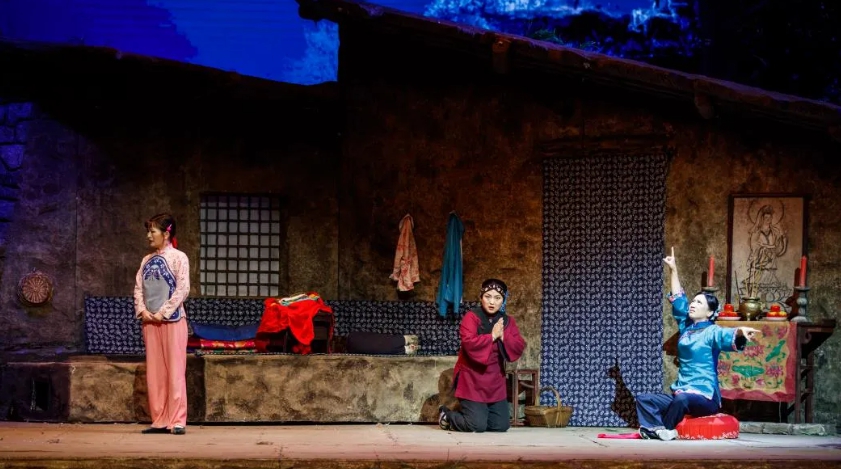
Little Erhei's Marriage (opera)
Overview
Little Erhei's Marriage is an opera produced by the China National Opera & Dance Drama Theater. It unfolds a narrative set in a remote mountainous village of Shanxi province, China, in the year 1942. The opera is especially notable for its exploration of themes such as love, bravery, and defiance against feudal traditions. The performance was scheduled on July 8-9 in 2017 at the National Center for the Performing Arts.
Plot Summary
The story centers around Little Erhei, the militia head of a small village, who is celebrated for his courage and tactical prowess in defeating enemies, earning him the distinction of a model sharpshooter. Erhei falls in love with Xiaoqin, a fellow villager, and their relationship is warmly embraced by the community. However, their path to marriage is obstructed by familial opposition. Erhei's father, steeped in superstition, insists that Erhei must marry a child bride, adhering to what he believes to be the will of heaven. On the other hand, Xiaoqin's mother contrives plans to marry her daughter off to Wu Guangrong, an affluent older man.
Conflict
The tension in the opera is further heightened by Jin Wang, a village ruffian with nefarious intentions for Xiaoqin. He seeks to sow discord and leverage the situation to his advantage, aiming to disrupt the bond between Xiaoqin and Erhei. Despite these challenges and the rigid constraints imposed by feudal customs, Little Erhei and Xiaoqin remain undeterred. Their steadfastness in the face of adversity becomes a poignant illustration of resistance against outdated societal norms.
Themes
Little Erhei's Marriage delves deeply into the themes of love, courage, and rebellion against oppressive traditions. The opera not only portrays the personal struggles of its protagonists but also reflects broader societal conflicts between progressive ideals and entrenched superstitions. The story is a testament to the enduring spirit of young lovers who challenge the status quo for the sake of their union and personal happiness.
Production Details
The opera's setting and period-specific narrative bring to life the cultural and historical context of rural China during the mid-20th century. It is performed at the National Center for the Performing Arts, a venue renowned for hosting a diverse array of cultural and artistic performances. The opera is a significant work within the repertoire of the China National Opera & Dance Drama Theater, showcasing its commitment to preserving and promoting traditional Chinese stories through the performing arts.
Cultural Significance
Little Erhei's Marriage is more than just an artistic work; it is a cultural artifact that offers insight into the social and familial dynamics of its time. The opera captures the essence of a critical period in Chinese history, characterized by transitions and the struggle between modernity and tradition. Through its narrative and characters, it encourages audiences to reflect on the enduring impact of these cultural legacies in contemporary society. Article reference1. Best bets. chinadaily.com.cn. 2017Photo Gallery(1 picture)CategoriesLiteratureTagChinese Modern LiteratureChinese Folk LiteratureTheaterCatalogue1. Overview2. Plot Summary3. Conflict4. Themes5. Production Details6. Cultural Significance- - - []








